Theme Song
If You're Curious About These Questions...
You should listen to this audiobook
- Have you ever wondered what happens when the President of the United States demands personal loyalty that conflicts with your oath of office?
- Did you know that some of the most intense battles for the soul of American justice took place in secret hospital rooms and high-stakes White House meetings?
- Are you curious about the specific leadership traits required to navigate a political firestorm while keeping your integrity intact?
Listen to A Higher Loyalty — Free Audiobook
Loading player...
Key Takeaways from A Higher Loyalty
- Understand how facing early life adversities, such as schoolyard bullying and a harrowing home invasion, can sharpen your emotional intelligence and fuel a lifelong drive to protect the defenseless.
- Discover why leading with compassionate mercy rather than angry punishment when mistakes occur can powerfully motivate your team to work harder and learn from their errors.
- Learn why true leadership requires profound humility, and how arrogant leaders inadvertently create fearful echo chambers where advisors are too scared to tell the truth.
- Recognize the stark difference between fear-based leadership that demands forced oaths of loyalty, much like the mafia, and ethical leadership that earns trust organically.
- See how putting your team's interests ahead of your own, while balancing toughness with a sense of humor, cultivates genuine and unwavering employee loyalty.
Learning Tools
Reinforce what you learned from A Higher Loyalty
Mind Map
A Higher Loyalty
Early Lessons & Formative Years+
Leadership & Humility+
Upholding Ethical Justice+
Leading the FBI+
The 2016 Election+
The Trump Administration+
Quiz — Test Your Understanding
Question 1 of 9
How did James Comey's childhood experience of being bullied influence his future career and character?
Question 2 of 9
What key leadership lesson did Comey learn from his teenage job working for grocery store owner Harry Howell?
Question 3 of 9
According to Comey, what is the primary danger of a leader lacking humility, a trait he observed in Rudy Giuliani?
Question 4 of 9
Why did Comey and his team ultimately decide to prosecute Martha Stewart for insider trading?
Question 5 of 9
What was the core issue that led to the dramatic hospital room showdown between Comey, John Ashcroft, and White House officials?
Question 6 of 9
When Comey became Director of the FBI, what was one of his primary goals for the organization's culture and demographics?
Question 7 of 9
Why did Comey decide to publicly announce the reopening of the Hillary Clinton email investigation just weeks before the 2016 election?
Question 8 of 9
What specific behavior from Donald Trump reminded Comey of the mafia bosses he used to prosecute?
Question 9 of 9
After being fired by President Trump, what action did Comey take regarding the private memos he had written about their conversations?
A Higher Loyalty — Full Chapter Overview
- 1Recommendation
- 2Key events in James Comey’s childhood included being bullied and having a great boss.
- 3After life-changing events, Comey learned the value of humility as a New York lawyer.
- 4While prosecuting mobsters and moving to Virginia, Comey learned more about leadership and life.
- 5Prosecuting Martha Stewart was necessary in a fair and ethical justice system.
- 6As a Department of Justice attorney, Comey pushed for lawful government surveillance practices.
- 7Comey also challenged the White House over its torture policies.
- 8As FBI director, Comey worked to lead a more ethical, effective, and diverse organization.
- 9After a violent 2015, Comey was struck by President Obama’s empathy and effective leadership.
- 10During the 2016 election, Comey faced a difficult decision in the Clinton investigation.
- 11While working with President Trump, Comey saw many similarities to a mafia boss.
- 12Comey did not expect to be fired, but he remains hopeful that justice will prevail.
- 13Final summary
A Higher Loyalty Summary & Overview
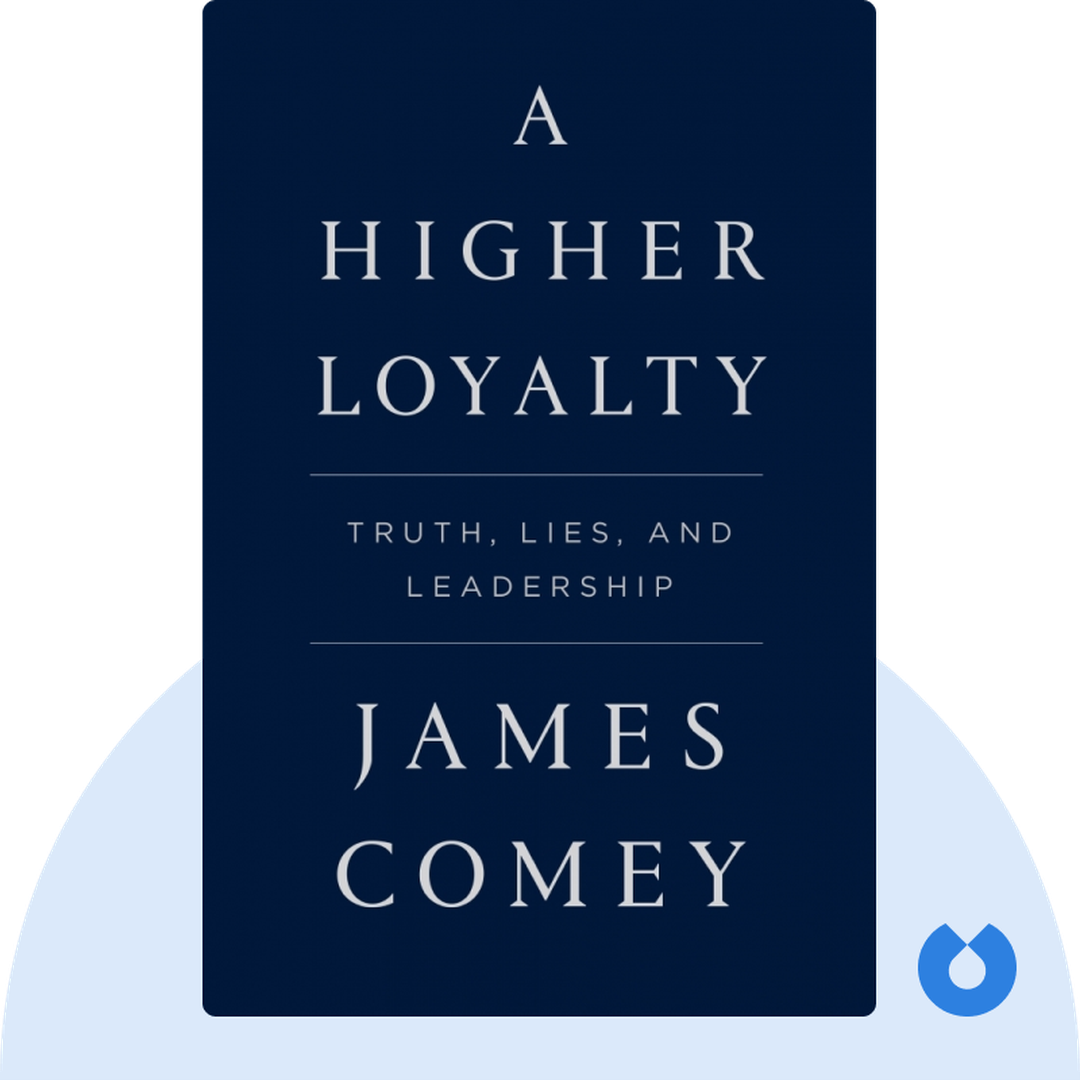
A Higher Loyalty (2018) is the revealing account of James Comey’s history as a respected public servant across multiple presidential administrations. Comey guides readers through many years of experience, including his fight against unlawful torture and surveillance policies during the second Bush administration, and his experience with the Trump presidency.
Who Should Listen to A Higher Loyalty?
- News and political junkies
- Students of law and ethics
- Readers eager for a peek at Washington’s inner workings
Books Similar to A Higher Loyalty
Readers who enjoyed this also liked these titles.