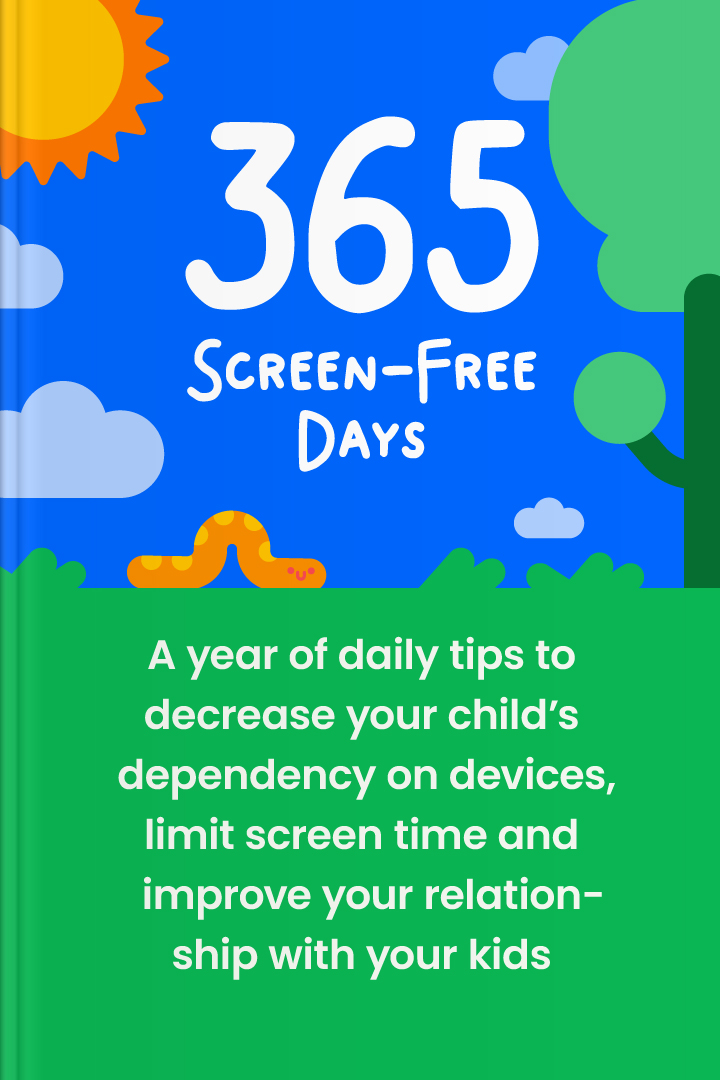
365 Screen-Free Days audiobook cover - Excessive screen time can quietly steal family connection, sleep, and calm—yet with small, kind steps and clear routines, families can reshape technology into a helpful tool and make room again for presence, play, and real rest.

365 Screen-Free Days

Excessive screen time can quietly steal family connection, sleep, and calm—yet with small, kind steps and clear routines, families can reshape technology into a helpful tool and make room again for presence, play, and real rest.

Airplane Mode & Dae Lee

4.0 / 5(3 ratings)

If You're Curious About These Questions...

You should listen to this audiobook

Listen to 365 Screen-Free Days — Free Audiobook

Loading player...

Key Takeaways from 365 Screen-Free Days

Learning Tools

Reinforce what you learned from 365 Screen-Free Days

Mind Map

365 Screen Free Days
The Problem: The "Quiet Thief"+
Tiny Beginnings: Small, Sticky Habits+
Gentle Rules & Real Alternatives+
Tech as a Tool, Not a Crutch+
Parental Modeling & Guidance+
Building Offline Skills & Joy+
Core Principles for a Calmer Home+

Quiz — Test Your Understanding

Question 1 of 10
According to the book, what is the 'quiet thief' that steals attention, mood, and sleep from families?
  • A. Demanding work schedules
  • B. Excessive screen time
  • C. Peer pressure from school
  • D. Lack of engaging hobbies
Question 2 of 10
What is the book's first and most crucial tip for introducing new screen time rules to the family?
  • A. Immediately confiscate all devices to show you're serious.
  • B. Begin with a family conversation to explain the 'why' behind the changes.
  • C. Create a rewards chart with expensive prizes for motivation.
  • D. Secretly install monitoring apps on all devices before announcing the rules.
Question 3 of 10
How does the book suggest using device features like 'Screen Time' or 'Digital Wellbeing'?
  • A. As a weapon to punish children for overuse.
  • B. As a mirror for awareness, to be reviewed calmly as a family.
  • C. As a way to secretly track children's activity without their knowledge.
  • D. As a tool to be used only by parents to enforce rules.
Question 4 of 10
What specific reason does the book give for avoiding screens for at least an hour before sleep?
  • A. It saves electricity and reduces the family's carbon footprint.
  • B. It ensures devices are fully charged for the next day.
  • C. Blue light exposure can interfere with melatonin and disrupt sleep patterns.
  • D. It prevents children from getting distracted from their evening chores.
Question 5 of 10
What is described as one of the most empowering shifts a family can make regarding screen time?
  • A. Switching from phone screens to larger tablet or TV screens.
  • B. Moving from passive consumption to active creation (e.g., making music or videos).
  • C. Consuming only educational content approved by parents.
  • D. Watching content together as a family instead of separately.
Question 6 of 10
The book suggests children often use screens to cope with difficult emotions. What is the recommended long-term solution?
  • A. Giving them a different, more educational app to use.
  • B. Teaching them non-digital coping strategies like physical activity, music, or drawing.
  • C. Letting them use screens but setting a strict timer.
  • D. Ignoring their feelings until the emotion passes on its own.
Question 7 of 10
What is the primary purpose of establishing 'no phone zones' at the dining table?
  • A. To prevent food from spilling on expensive devices.
  • B. To create a predictable space where attention is protected for family connection.
  • C. To force children to eat their vegetables without distraction.
  • D. To make meals shorter so there is more time for homework.
Question 8 of 10
According to the book, what is the significant impact of turning off unnecessary phone notifications?
  • A. It dramatically increases the phone's battery life.
  • B. It prevents you from getting important messages from school.
  • C. It protects concentration by reducing fractured attention.
  • D. It makes the phone's operating system run much faster.
Question 9 of 10
What is the book's core philosophy on making changes to a family's screen habits?
  • A. Change is only possible with a complete, immediate digital ban.
  • B. Parents should become tech experts to stay ahead of their kids.
  • C. The primary goal is to lower screen time numbers, regardless of the method.
  • D. Change works best when it is compassionate, consistent, and rooted in connection, not control.
Question 10 of 10
How does the book recommend addressing 'comparison culture' fueled by social media?
  • A. By completely banning children from all social media platforms.
  • B. By encouraging them to post more to get more positive feedback.
  • C. By talking about how profiles are curated and practicing gratitude for their own lives.
  • D. By limiting their friendships to people who are not on social media.

365 Screen-Free Days — Full Chapter Overview

365 Screen-Free Days Summary & Overview

This warm, practical guide reframes excessive screen time not as a battle to win, but as a relationship to rebuild—between parents and children, and between each person and their devices. With simple conversations, realistic boundaries, and gentle routines, families can reduce mindless scrolling without turning the home into a constant argument.

Across 31 encouraging tips, listeners are guided to start small, model the behavior they want to see, set up phone-free spaces and times, and create appealing offline alternatives. Along the way, the focus stays on connection, sleep, emotional health, and teaching children to become capable, mindful digital citizens.

Who Should Listen to 365 Screen-Free Days?

  • Parents and caregivers who feel screen time has quietly taken over family routines, especially around meals, sleep, and homework
  • Families who want fewer power struggles and more cooperation by setting boundaries with explanation and empathy
  • Anyone raising children in a connected world who wants practical, doable habits for healthier tech use

About the Author: Airplane Mode & Dae Lee

Author information was not provided in the source content. This narration is a faithful, supportive rewrite of the supplied summary and tips, designed for calm listening and practical use.

🎧
Listen in the AppOffline playback & background play
Get App